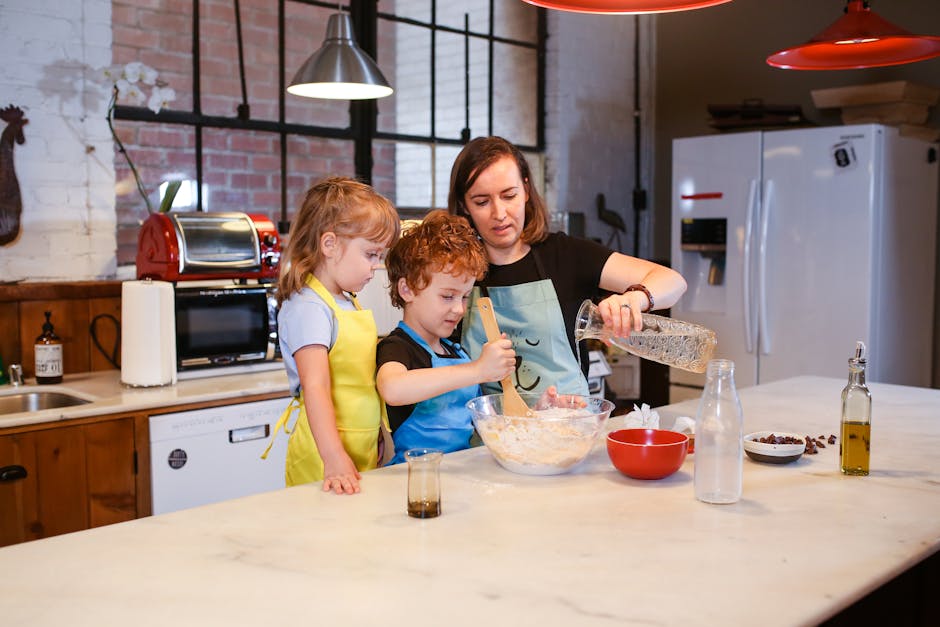
You’re on the floor. Toys everywhere. Your kid is looking at you like you’re supposed to know what to do.
And you don’t.
You feel tired. Guilty. Like you’re failing at something that’s supposed to be fun.
I’ve watched this happen hundreds of times.
Parents show up ready to connect (then) freeze because play feels like performance.
It shouldn’t.
Playing Lessons Fparentips isn’t about Pinterest-perfect crafts or 45-minute lesson plans.
It’s about small shifts. Real talk. What actually works when you’re exhausted and your kid is three.
I’ve coached parents through this for years. Not theory. Just what moves the needle.
You’ll walk away with a lighter mindset and two or three things you can try today.
No guilt. No prep. Just more joy (and) real connection.
“Just Playing” Is Your Kid’s Secret Lab
I watched my kid spend 47 minutes stacking blocks, knocking them down, then stacking them slightly differently.
She wasn’t “just playing.” She was running experiments.
Every time she balanced that wobbly tower, she tested physics. Every time she paused before handing me the red block, she weighed desire against rules. That’s problem-solving.
No worksheet required.
Pretend play? That’s emotional regulation in action. When she whispered to her stuffed bear about being scared of the vacuum, she wasn’t avoiding feelings.
She was naming them. Mapping them. Trying them on like jackets.
You don’t teach that. You just let it happen.
Social skills show up quieter. Like when two kids argue over who gets the blue car (then) pause, look at each other, and say “you go first.” No adult prompted it. They negotiated.
They read cues. They practiced empathy without a lesson plan.
That’s why I stopped scripting playtime.
No more “Why don’t you build a castle?” or “Let’s count the trucks!”
My job isn’t to direct. It’s to clear space. To keep it safe.
To stay nearby but not in it.
The pressure lifts when you stop thinking of play as prep for school. And start seeing it as real work. Serious work.
The kind that wires the brain for life.
Fparentips helped me trust this more. Not with theories. With actual things to do (and not do) tomorrow.
Playing Lessons Fparentips isn’t about adding more to your plate. It’s about removing the noise so their natural learning can breathe.
You don’t have to be a play expert.
Just be present.
And stop apologizing for the mess.
The Parent’s Playbook: Stop Performing, Start Playing
I used to think play had to look like Pinterest. Then my kid handed me a spaghetti noodle and called it a magic wand. I laughed.
And something clicked.
Be a sportscaster, not a director.
Say what you see: “You’re balancing three blocks.” Not “Try stacking them taller.”
That tiny shift hands confidence to your kid. And lifts the weight off you to fix, improve, or improve their play.
(Yes, even when they’re smearing yogurt on the cat.)
Ten minutes. That’s it. Phone down.
No agenda. Just you and them (fully) there. Call it the 10-Minute Magic Rule.
An hour of distracted scrolling while they build a tower? Useless. Ten minutes of eye contact, silly voices, and real presence?
That sticks. I timed it. Twice.
It works.
Follow their lead. Even if their lead is a dust bunny in the corner. You don’t need props.
You don’t need training. You just need to notice what caught their eye right now. Last week, my kid opened the recycling bin and declared it a “rock store.”
So I walked in, held out two fingers, and said, “I’ll take two quartz and a discount on granite.”
He giggled so hard he dropped his rock.
That was play. Not performance.
This isn’t about raising a genius.
It’s about keeping your own joy alive while you show up for theirs.
The best part? You get better at it every time. No curriculum.
No checklist. Just attention (and) willingness.
If you want actual, usable ideas. Not theory. Check out the Playing Lessons Fparentips guide.
It’s short. It’s real. It skips the fluff.
And it starts with what you already have: your voice, your time, and your kid’s next weird idea.
You don’t need to be perfect. You just need to be there. Really there.
You can read more about this in Nutrition guide fparentips.
From “I’m Bored” to “Wait, One More Round”

I’ve been there. Standing in the kitchen at 4:17 p.m., holding a half-eaten granola bar, watching my kid stare blankly at the wall.
“I’m bored.”
That sentence hits like a tiny hammer.
So I stopped waiting for inspiration. I built a mental rolodex of prompts that work now. No prep, no gear, no energy required.
When You Have No Energy
I-Spy from the couch counts. Seriously. Point at the ceiling fan and say, “I spy something that spins.” Let them guess.
You don’t even have to move your head.
You be the patient in Doctor. They get the stethoscope (a spoon), the chart (a napkin), and full authority. I once got diagnosed with “too much broccoli” and prescribed cookie breaks.
Pillows become a fort. Blankets become walls. A laundry basket becomes the entrance tunnel.
No instructions needed. Just start stacking.
If you’re too tired to stand, sit. If you’re too tired to talk, point. That’s enough.
Using Everyday Objects
A laundry basket is not laundry storage. It’s a spaceship. A boat.
A shopping cart for stuffed animals.
Pots and pans? Drum set. Wooden spoon = drumstick.
Tap slow. Tap fast. Let them conduct you.
Junk mail is office paperwork. Sign it. Stamp it (use a potato cut into a shape).
File it in a shoebox. Bonus: it teaches sorting before they know it’s sorting.
This isn’t magic. It’s just shifting your eyes.
Taking It Outside
Texture scavenger hunt: find something smooth (a rock), something bumpy (tree bark), something soft (grass). No list. Just walk and name.
Cloud watching. Lie on the ground. Say what shapes you see.
Don’t correct theirs. “That one’s a dragon eating toast” is valid.
I used to think play had to be planned. Then I read the Nutrition Guide Fparentips and realized the same rule applies to play: small consistent inputs beat grand gestures every time.
Playing Lessons Fparentips aren’t about perfection. They’re about showing up. Even if you’re running on fumes.
Common Playtime Hurdles (and How to Clear Them)
My kid won’t play without me. So I sit down. Five minutes.
Just building, stacking, pretending. Then I say: “I’m going to watch you build for a minute while I sip my coffee.”
I don’t leave. I just shift my role from player to witness.
It works faster than you think.
We have too many toys. They’re buried under plastic. Still bored.
Toy rotation fixes that. Put half away. Rotate every two weeks.
Fewer options = longer focus. Deeper play. Less overwhelm.
Your kid isn’t broken (their) toy shelf is.
They only want screen time. I get it. I’ve been there.
Instead of cutting it off, I use it as a bridge. If they love Bluey, we draw the Heeler house. If it’s Paw Patrol, we build the tower with blocks.
No guilt. No lectures. Just meet them where they are.
You don’t need perfect play. You need real moments. Some days that means sitting on the floor.
Some days it means letting them watch one more episode. Then doing one thing together after. That’s how connection sticks.
I keep a list of go-to ideas when energy is low. Things like “draw a silly monster,” “build a fort with blankets,” or “sort buttons by color.”
These aren’t magic. They’re just next steps.
And if you want more of those. Practical, no-fluff moves that actually land. Check out the Connection advice fparentips.
It’s where I share what’s worked in real homes, not textbooks.
Playing Lessons Fparentips isn’t about doing more. It’s about doing less. And doing it with presence.
That’s the part nobody tells you.
Ten Minutes Is All You Need
I know that pressure. That voice saying I should be better at this. That guilt when your kid asks to play and you’re already scrolling.
You don’t need to be fun. You don’t need to entertain. You just need to show up.
The Playing Lessons Fparentips aren’t about perfection. They’re about presence.
That’s why the 10-Minute Magic Rule is the only thing you must remember.
Set a timer. Just ten minutes. Tonight.
Or tomorrow morning. Doesn’t matter when (just) do it.
Put your phone away. Kneel down. Let your child lead.
Watch what happens when you stop trying to fix play. And just join it.
You’ll feel it immediately. Lighter. Closer.
Real.
Your kid isn’t waiting for a pro. They’re waiting for you.
So go. Set the timer now.