You’re exhausted. Your kid is wired. And homework time feels like pulling teeth.
I’ve been there. More times than I care to count.
Most learning advice assumes you have hours to prep. Or that your kid will suddenly love flashcards. They won’t.
Active Learning Fparentips aren’t about more work. They’re about shifting how learning shows up in your day.
I’ve watched parents try fancy curriculums. Then quit after week two. Because it’s too much.
Too rigid. Too disconnected from real life.
This isn’t theory. It’s what works when dinner’s burning and your child’s staring at the ceiling instead of their math sheet.
You’ll walk away with strategies you can use tonight. No printing. No prep.
Just small shifts that actually stick.
Real families. Real routines. Real results.
The Homework Cop Is Fired
I stopped asking “Did you get the right answer?”
And started saying “That’s a great question (how) could we find the answer?”
I was handing over the wheel.
It felt weird at first. Like I was slacking off. But I wasn’t.
You know what happens when you say “Let’s figure this out together”? The kid leans in. Not away.
Their shoulders drop. Their voice gets louder. They try.
One time my daughter asked why the sky turns orange at sunset. Instead of explaining Rayleigh scattering (which, honestly, I barely remember), I said “What do you think changes when the sun gets low?”
She grabbed her phone, searched “sun angle light color,” and read aloud for two minutes. She remembered it three days later.
She owned it.
Another time she got stuck on a math problem. I didn’t walk through the steps. I asked “What part feels shaky?”
She pointed to the fraction division.
So we pulled out rice cakes and cut them up. Real. Physical.
No screen.
This isn’t about being lazy. It’s about Active Learning. It’s slower at first.
But it sticks. It builds confidence instead of dependency.
The pressure drops. For both of you. You stop being the grader.
You become the guide.
Fparentips has real examples. Not theory. Of how to pivot mid-conversation and keep curiosity alive.
Try one this week. Just one.
You’ll notice the difference in their posture. In your own breath. In how often they ask you a question back.
Learning Happens While You’re Doing Stuff
I used to think learning needed a desk. A timer. A quiet room.
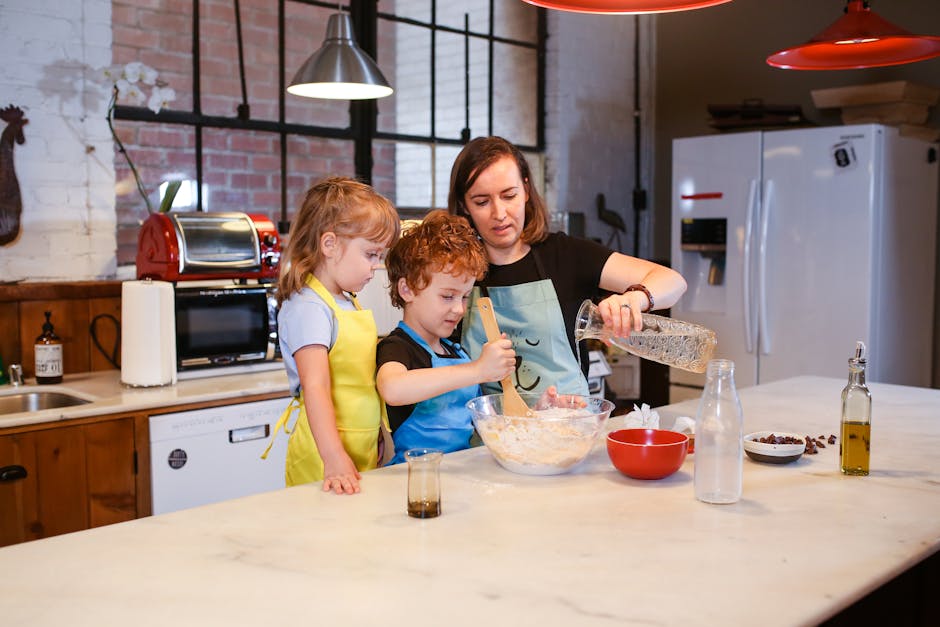
Turns out, my kid learned fractions while stirring pancake batter.
The grocery store is a Active Learning Fparentips goldmine. We compare price per ounce. No calculator, just real math.
She reads the list aloud. Finds “cumin” on the shelf. Reads ingredient labels like they’re mystery novels.
We talk about why carrots go in the “vegetable” pile and why soda doesn’t. (Spoiler: it’s not magic.)
The kitchen? That’s our lab. She measures ¾ cup of flour.
Then halves it. Then spills it. (Science requires cleanup.)
We melt butter and watch it bubble.
I ask: What changed? Why does it smell different now?
She doesn’t know the word “emulsification.” She knows butter goes from solid to shiny liquid (and) that it makes cookies soft.
Car rides used to be silent. Now they’re story time. We take turns adding to “I’m going on a picnic…”
She says “jellyfish.” I say “jalapeño.” She cackles.
We keep going. Sometimes we listen to audiobooks. Sometimes we name every blue thing we see.
(Yes, even that weird mailbox.)
None of this needs prep. No flashcards. No lesson plans.
No guilt if you forget.
You don’t have to teach. Just notice what’s happening (and) ask one question. *How many apples for $5? What happens if we double the recipe?
What’s the first word in that sentence?*
It’s not about perfection.
It’s about showing up. Not as a teacher, but as a person who pays attention.
And honestly? The best lessons happen when you’re trying to get dinner on the table.
I go into much more detail on this in Health hacks fparentips.
Gamify Your Day: Turn Learning Into Play
I used to think gamification meant slapping points on everything and calling it a day. It’s not. It’s about tapping into how your brain already works.
Your brain likes feedback. It likes small wins. It likes knowing exactly what comes next.
Points, challenges, and rewards aren’t gimmicks (they’re) shortcuts to Active Learning Fparentips.
Try this: the Scavenger Hunt for Knowledge. No apps. No prep.
Just walk into your living room and say: Find five things that start with ‘B’.
Or: Name three objects that are cylinders.
You’ll see kids (and yes, adults) lean in. Their eyes scan faster. They argue playfully about whether a banana counts as a cylinder.
(It does. Don’t fight me on this.)
Then there’s Beat the Clock. Set a timer for 90 seconds. Race through spelling words or multiplication facts.
Not to be perfect. Just to beat yesterday’s time.
Repetition stops feeling like punishment when it’s framed as a personal record.
Quest Board is where it gets real. Draw a simple grid on paper. Each square is a quest: Read for 20 minutes, Write three sentences about clouds, Fold the laundry.
Complete three? Open up 30 minutes of tablet time. No vague promises.
No “maybe later.” Just clear cause and effect.
Health hacks fparentips work the same way (small,) repeatable actions with immediate feedback. That’s why I keep coming back to them. They don’t ask for overhaul.
They ask for one better choice.
Don’t overdesign it. Start with one hunt. One timer.
One board. If it feels forced, scrap it and try again tomorrow.
Follow Their Obsession. Not the Curriculum
I stopped fighting my kid’s Minecraft phase.
Turns out, it was the best teaching tool I ever had.
They built a castle? Great. Now write the backstory for the knight who lives there.
That’s storytelling. Not “language arts.” Just storytelling.
They argued about which sword does more damage? Perfect. Let’s calculate it.
Resource costs, hit points, cooldown timers. That’s math hiding in plain sight. (And yes, they did the math.
Because they wanted the answer.)
Dinosaurs? Same thing. Measure T. rex vs.
Triceratops on the living room floor. Compare weights using cereal boxes as units. Talk about why the Cretaceous ended.
No textbook required. Just curiosity, and a library card.
Art lovers? Mix paint until they nail the exact shade of Van Gogh’s sky. Then ask: why does yellow + blue make green?
That’s chemistry. Not a lab coat required.
This isn’t “tricking” them into learning.
It’s respecting what already lights them up.
When you meet them where they are, they feel seen. Not managed. Not corrected. Seen.
That’s when real learning sticks.
I tried forcing fractions before letting them design their own Roblox avatar. Big mistake. Fractions waited.
Avatar design did not.
Active Learning Fparentips means starting with what’s already true. Not what’s on the lesson plan.
If you’re wondering how to tie this to everyday routines (like) meals, screen time, or bedtime (check) the Nutrition Guide. It shows how small, consistent hooks work. No lectures.
Just real life.
Learning Doesn’t Have to Feel Like Laundry Day
I’ve watched parents drown in worksheets and screen time guilt. You want connection (not) another chore.
This isn’t about adding more. It’s about flipping what you’re already doing. That 10-minute walk?
A scavenger hunt. Dinner prep? A kitchen laboratory.
Same time. Different energy.
You don’t need perfect conditions. You need one small shift.
This week, choose just one plan from the list. Try it. See how your kid’s eyes light up when learning feels like play.
That spark? That’s not magic. It’s what happens when you stop forcing learning.
And start joining it.
Your child already loves to figure things out. You just forgot how fun it is to watch them.
So go ahead. Pick one. Do it Tuesday.
Or Thursday. Or right after breakfast.
You’ll feel it (lighter.) Closer. Real.
Start with Active Learning Fparentips. It’s the shortest path back to joy.
Do it this week.