You know that 6:47 p.m. meltdown.
The one where your kid slams a math worksheet and says “I hate learning.”
I’ve been there. More times than I care to admit.
Most parents aren’t teachers. We don’t have lesson plans or quiet classrooms. We have laundry piles, dinner to cook, and zero bandwidth for “educational best practices.”
That’s why Active Learning Advice Fparentips isn’t theory. It’s what works when your kid is tired, you’re tired, and the clock says it’s time to “do homework.”
I’ve tested every trick in this guide with real kids. On real nights (with) real distractions.
No fluff. No guilt-tripping. Just low-effort, high-impact ways to turn friction into curiosity.
You’ll walk away knowing how to spot learning in the mess (not) just the worksheet.
And how to stop fighting for focus… and start finding it together.
The Foundation: From Taskmaster to Learning Partner
I used to quiz my kid on spelling words like it was a pop quiz from middle school.
Then I watched her shut down after the third wrong answer. Her shoulders dropped. Her voice got quiet.
She wasn’t failing spelling. She was failing engagement.
Curiosity is the engine. You’re not the driver. You’re the person who hands over the map and the gas.
Rote memorization? Flashcards. Drills.
Timed tests. It’s exhausting for everyone. And it sticks about as well as glitter on wet paper.
Engaged learning looks like her asking why magnets stick to the fridge but not the couch. It looks like her drawing connections between a ladybug and the red stop sign outside. It’s messy.
It’s loud. It’s real.
So here’s what I changed:
Ask “What was the most interesting question you asked today?” instead of “What did you learn?”
Praise the effort of figuring something out (not) just the right answer.
Let a “wrong” answer launch a conversation (like when she insisted clouds were made of cotton candy (we) looked up water vapor together).
That shift is in the this guide. Practical moves, not theory.
One afternoon, she said 5 + 7 = 13. I didn’t correct her. I asked how she got there.
She counted on her fingers, miscounted once, then retraced her steps. We talked about counting strategies for ten minutes. That moment mattered more than any worksheet.
Active Learning Advice Fparentips isn’t about doing more. It’s about doing less of the wrong things.
You don’t have to know all the answers.
You just have to stay curious alongside them.
That’s enough.
Everyday Adventures: Learning Hides in Plain Sight
I used to stress about “teaching time.” Like it had to be scheduled. Like it needed flashcards and a quiet room.
It doesn’t.
Learning happens while you’re doing real life. Not instead of it.
In the Kitchen
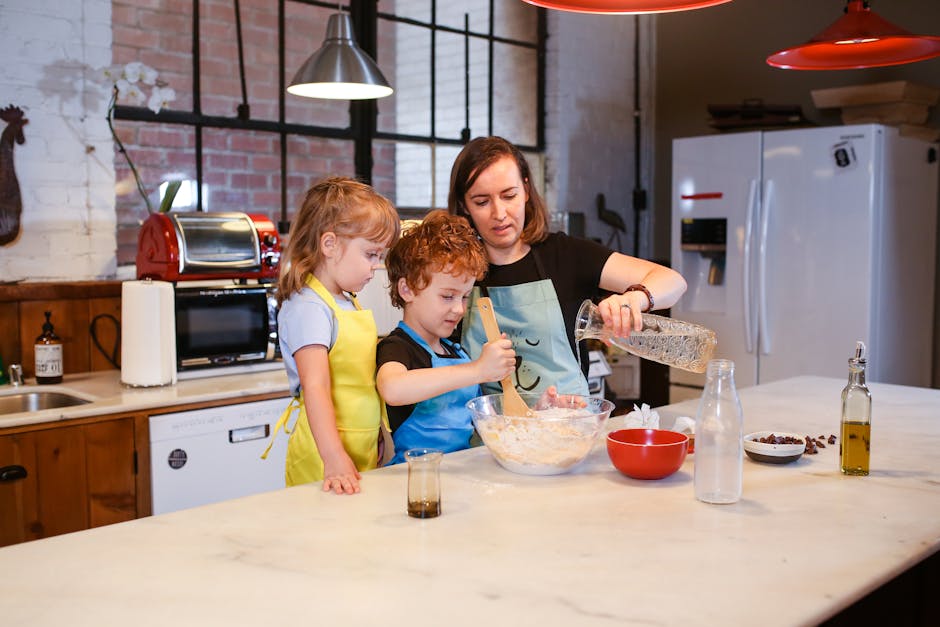
I measure flour with my kid. Half a cup. Then a quarter.
We talk about what “half” means (not) as a test, but because the spoon is full, then half-full, then empty.
We follow a recipe step by step. First the eggs. Then the sugar.
Then the flour. That’s sequencing. No worksheet required.
And when the batter bubbles in the pan? That’s science. I ask: *Why did it puff up?
What changed?* (Spoiler: heat + baking powder = tiny air balloons.)
At the Grocery Store
We set a $10 limit. She holds the list. We estimate totals as we go.
Does that cereal fit? Does that yogurt push us over?
She reads signs. “Dairy.” “Produce.” “Organic.” Letters become tools (not) just symbols on a page.
We sort apples from carrots at checkout. Not because I said “sort,” but because she asked why the bananas aren’t next to the broccoli.
On a Walk
We count steps. Not to hit 10,000. Just to notice rhythm.
One-two. One-two. Then we switch: count red cars.
Then dogs wearing collars.
I point to a leaf. Ask: *What word fits this color? Crisp?
Waxy? Veiny?* Language grows when it has skin on it.
Observation isn’t passive. It’s leaning in.
You don’t need more time. You need to stop waiting for “learning time” to begin.
Active Learning Advice Fparentips means trusting that curiosity shows up where you already are.
No prep. No lesson plan. Just you, your kid, and the world (already) full of questions.
Gamify Everything: Math, Reading, Science (No) Screens Needed
I don’t buy the idea that learning has to feel like work.
Game-based learning isn’t about turning school into a video game. It’s about using play as a lever for attention and memory. Real play.
The kind where kids move, talk, guess, and laugh.
You already know this works. You’ve seen it. When your kid wants to do math because it means jumping on chalk numbers?
That’s not magic. That’s design.
Sidewalk Chalk Calculator (Math)
Draw big circles with numbers 0. 20 on the sidewalk. Call out “7 plus 5” (they) jump to 12. Or “14 minus 6”.
I go into much more detail on this in this resource.
They land on 8.
No timers. No scoreboards. Just movement + mental math.
Their body helps their brain lock it in.
Kids remember what they do, not what they stare at.
Storytelling Mad Libs (Reading)
Write nouns, verbs, and adjectives on separate slips. Put each pile in a cup. Take turns pulling one from each and building a sentence.
Aloud.
“The purple giraffe sneezes on a taco.” Yes. It’s dumb. That’s why it sticks.
This builds vocabulary and syntax awareness. Without worksheets.
Kitchen Sink Lab (Science)
Grab a bowl of water. Toss in a cork, a coin, an apple, a plastic toy car.
Ask: “Which will sink? Which will float? Why do you think that?” Then test.
No lab coat required. Just curiosity + observation. That’s real science.
The Active Learning Guide Fparentips goes deeper into how to adapt these for different ages and energy levels.
You don’t need fancy kits. You don’t need Wi-Fi.
You need three things: a question, something to hold or move, and permission to be wrong.
That’s how real understanding starts.
Not with silence. With noise. With guessing.
With splashing water.
Try one today. Not all three. Just one.
See if your kid asks to do it again.
Smarter Screen Time: Not Just Watching (Making)
I stopped worrying about screen time the day my kid built a game instead of binging one.
Passive scrolling? Still bad. But coding a story in ScratchJr?
Recording a podcast about dinosaurs? Walking through the Louvre on a tablet? That’s active learning.
You’re not raising a viewer. You’re raising a maker.
Does it ask questions? Does it let them change something? Does it need their hands and brain (not) just their eyes?
If not, close it.
I skip apps that autoplay or lock kids into linear paths. Life’s too short for digital babysitters.
The Active Learning Advice Fparentips helped me spot the difference fast.
Want a no-fluff checklist for what to keep and what to trash? Grab the Active Learn Parent.
It’s got real examples. Not theory.
Learning Doesn’t Need a Classroom
I’ve watched kids shut down when learning feels like a chore. You have too.
That forced, glazed-over look at the kitchen table? It’s not laziness. It’s resistance to something that doesn’t feel real.
Learning can be light. Natural. Even fun (if) you stop treating it like homework and start treating it like life.
This week, pick one thing. The kitchen sink experiment. A grocery store scavenger hunt.
Just one.
No prep. No pressure. Just curiosity (and) your kid’s attention.
You’ll see it right away: their eyes lift. Their questions get sharper. They lean in.
That’s not magic. It’s what happens when learning stops being imposed (and) starts belonging to them.
You want your child to love asking questions (not) dread answering them.
So try it. Today. Not next month.
Not after vacation.
Go grab a spoon, a bag of apples, or a sidewalk chalk line (and) start.
Your kid’s curiosity is already there. You just need to meet it where it lives.