You’ve seen it.
Your kid stares blankly at flashcards but builds a tower of blocks for forty-five minutes while narrating a full backstory for each piece.
That’s not distraction.
That’s learning.
Active learning isn’t about sitting still and repeating facts. It’s learning by doing, questioning, reflecting, and applying. Not watching.
Not memorizing. Doing.
Most parents I talk to want to help. But they’re drowning in advice. Some tips sound like kindergarten teacher jargon.
Others feel like homework for you. And half the stuff online? Zero evidence behind it.
Just vibes.
I’ve watched this play out in real homes. Not labs or textbooks. For over a decade.
Kids ages 3 to 12. Different temperaments. Different attention spans.
Different ways of thinking. What works isn’t flashy. It’s simple.
Repeatable. Real.
You don’t need a degree or a classroom setup. You need clarity. A few solid moves.
And confidence that you’re not wasting time.
That’s why this is built around Active Learn Parent Guide Fparentips. Not theory, not trends, just what actually sticks.
In the next few minutes, I’ll show you how to spot active learning in action (and) how to nudge it forward without turning your living room into a lesson plan.
No fluff. No guilt. Just what works.
Why Sitting Still Doesn’t Teach Much
I used to think if my kid just heard it enough, they’d get it. Wrong.
Passive learning. Listening, watching, copying (is) like pouring water into a colander. It looks like learning.
It isn’t.
Your brain doesn’t strengthen pathways by repetition alone. It needs movement, choice, and real-time feedback.
Try this: one kid copies “beautiful” ten times. Another builds it with letter tiles, says “eu makes the ‘yoo’ sound here,” and draws a crown over the word. Which one remembers it tomorrow?
The second one. Every time.
Children retain 75% more when they teach back a concept versus hearing it once. (Source: Dunlosky et al., Improving Students’ Learning With Effective Learning Techniques, 2013.)
“But my child needs structure.” Yes. And active learning is structured. It’s just not rigid.
Scaffolding isn’t chaos. It’s giving them the right tool at the right moment. Not the whole toolbox dumped on the floor.
This isn’t about replacing school. It’s about what happens after the bell rings. Reinforcing.
Digging deeper. Making it stick.
That’s why I built the Fparentips guide. To help you do that without planning a lesson every night.
The Active Learn Parent Guide Fparentips is just that: a no-fluff, step-by-step way to turn everyday moments into real learning.
You don’t need flashcards. You need presence. And a little plan.
Start small. Pick one thing. Do it with them.
Not for them.
Turn Routine Into Real Learning (No) Prep Required
I do these five things every week. Not because I’m trying to be a perfect parent. Because they work.
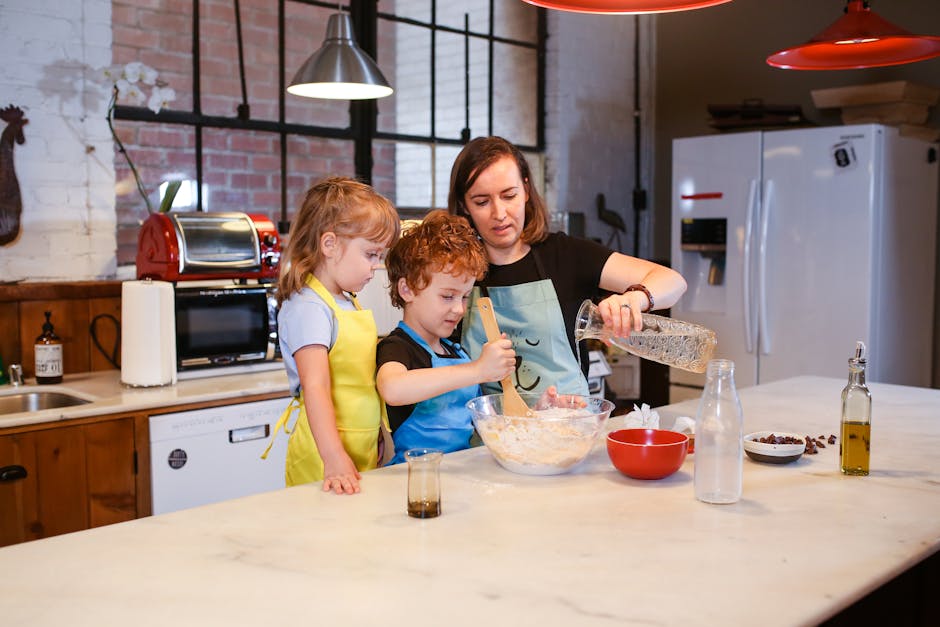
Cooking is math in disguise. I hand my kid the measuring cup and ask: “What’s half of three-quarters?”
Not “Here’s the answer.” Just the question. Fractions click faster when you’re pouring flour.
Takes 90 seconds. Zero prep.
Stealth skill: Proportional reasoning. If they groan? I say, “Okay (let’s) just guess.
What feels right?” Then we test it.
Grocery shopping is mental math boot camp. I point to two cereal boxes and ask: “Which one’s cheaper per ounce?”
They don’t need a calculator. Just curiosity.
Stealth skill: Unit rate logic. Resisting? I pick the wrong one on purpose.
They catch it. Instant buy-in.
Walking the dog is field science. I stop and ask: “Why do those leaves look different today?”
No lecture. Just noticing.
Stealth skill: Pattern recognition. Frustrated? We name one thing.
Just one (and) leave it there.
Sorting laundry teaches categorization. I say: “What goes together (and) why?”
Not “Sort by color.” That’s boring. Stealth skill: Early coding logic (if/then grouping).
You don’t need worksheets or apps. The Active Learn Parent Guide Fparentips has more of this. No fluff, no jargon.
Just real moments. Made real.
Questions That Spark Thinking. Not Just Answers

I used to ask “What’s the answer?”
Then I watched kids shut down. Or guess. Or wait for me to tell them.
So I switched.
Now I ask things like “What makes you say that?”
That one question alone changed everything.
I go into much more detail on this in this article.
It forces evidence. Not memory. Not luck.
Try swapping “How much is 4+5?” for “How did you figure out 4+5? Could you show me two ways?”
One invites thinking. The other tests recall.
Big difference.
I group my go-to questions by purpose:
Evidence: What makes you say that?
Experimentation: How could we test that idea?
Flexibility: What’s another way to solve this?
Yes/no questions train silence. Open-ended ones train reasoning. And confidence.
But here’s what no one tells you:
Ask one question. Pause for seven seconds. Let the quiet do the work.
Then. only then. Ask one follow-up. That’s the one-question rule.
Over-questioning feels like interrogation. It triggers defensiveness. These questions don’t correct.
They collaborate.
They turn “You’re wrong” into “Tell me more.”
That shift kills power struggles before they start.
The Active Learning Advice Fparentips page walks through real examples (no) theory, just what works in messy kitchens and cluttered living rooms.
I keep it printed on my fridge. (True story.)
When Active Learning Feels Hard (And) What to Do Next
I’m tired after work. My child shuts down with anything new. I don’t remember how to do fractions myself.
Those aren’t excuses. They’re data points. Real ones.
So here’s what actually works:
Use 2-minute thinking breaks. Ask one question while brushing teeth. “What’s one thing you noticed about that cloud?” Done. No prep.
No grading.
When your kid says “I don’t know,” say: “That’s great (we’re) about to find out together.” Say it like you mean it. Because you do.
Meltdowns? Breathe first. Name the feeling: “This feels loud.” Then offer one choice: “Do you want the blue pencil or the red one?” Not two choices.
One.
Progress isn’t perfect execution. It’s tracking wins like: Today I asked a question instead of giving an answer. Write it down. On a sticky note.
In your phone. Just track it.
You don’t need more time. You need better use on the time you have.
That’s why I built the Active Learn Parent Guide Fparentips (not) as another checklist, but as a reset button for real days.
It’s not about fixing everything. It’s about spotting what’s working (and) doing that more.
The fixes are small. The shift is real.
Fparentips is where I keep the scripts, the low-effort prompts, and the permission to stop pretending you’ve got this figured out.
Start Small, Stay Consistent (Your) First Active Learning
I’ve been there. Staring at my kid’s homework, wondering if I’m doing enough. Wondering if I even know how.
You don’t need expertise. You need curiosity. And consistency.
That’s it.
Go back to section 2. Find one routine moment tonight. Brushing teeth, setting the table, waiting for pasta to boil.
Pick one open-ended question. Not “What’s 2+2?” Try “What made you laugh today?” or “What would you change about this story?”
Write it down. On a sticky note. Put it where you’ll see it before dinner.
No prep. No pressure. Just that one question.
That one moment.
The goal isn’t to turn every minute into a lesson (it’s) to turn every lesson into a moment of real connection.
You want proof it works? Thousands of parents using Active Learn Parent Guide Fparentips say this tiny shift changed how their kids think (and) how they listen.
Grab a sticky note. Write it now.