You’re standing in the cereal aisle. Staring at boxes. Reading labels that say “whole grain” and “low sugar” and “made with real fruit” (all) on the same box.
You know what’s in your kid’s lunchbox. You don’t know if it’s enough. Or if it’s right.
I’ve been there. More times than I can count. And every time, I walked out with the same question: What actually works?
This isn’t another guilt trip disguised as advice. No “you must eliminate all processed food” nonsense. No 17-step meal prep routines for people who barely have time to brush their teeth.
This is Nutrition Guide Fparentips (practical,) science-backed, age-specific.
Built from AAP guidelines, USDA MyPlate, WHO recommendations. Not influencer trends.
I’ve used these strategies with families juggling three jobs, picky eaters, tight budgets, and zero cooking confidence.
You want clarity. Not complexity. Not more noise.
You’ll get real steps. Real timing. Real ways to feed kids well (even) when you’re running on fumes.
Let’s start.
Why “Just Eat Healthy” Fails Kids
I tried it. Told my kid to “just eat healthy.” Watched him push broccoli around his plate for 17 minutes.
Kids aren’t tiny adults. Their bodies are building bones, wiring brains, and stacking neural pathways at speeds we don’t see in adulthood.
A child’s body is like a construction site: it needs specific materials at specific times.
Iron? Key between 6 (24) months. Miss that window, and attention, energy, and learning take a hit.
Sometimes permanently.
Calcium and vitamin D? Non-negotiable before adolescence. That’s when bone density locks in.
Not later. Not “eventually.”
Picky eating isn’t a phase you wait out. Research shows food exposure before age 5 directly shapes taste preferences into adulthood. (Source: Journal of the Academy of Nutrition and Dietetics, 2022)
Skipping breakfast? Elementary kids lose focus by 10 a.m. A 2021 study found attention span dropped 32% in classrooms where >40% skipped morning meals.
You wouldn’t hand a contractor mismatched bricks and say “just build.” So why do we treat kids’ nutrition like it’s flexible?
this article gives real tools. Not slogans. For feeding growing brains and bodies.
The Nutrition Guide Fparentips walks you through what to serve, when, and why (no) jargon, no guilt.
Start there. Not with another vague “eat better” talk.
Balanced Meals: No Cooking, No Clock-Watching
I built my own version of this years ago. When my kid refused everything but toast and applesauce. And I was working 60-hour weeks (I) stopped trying to cook dinner.
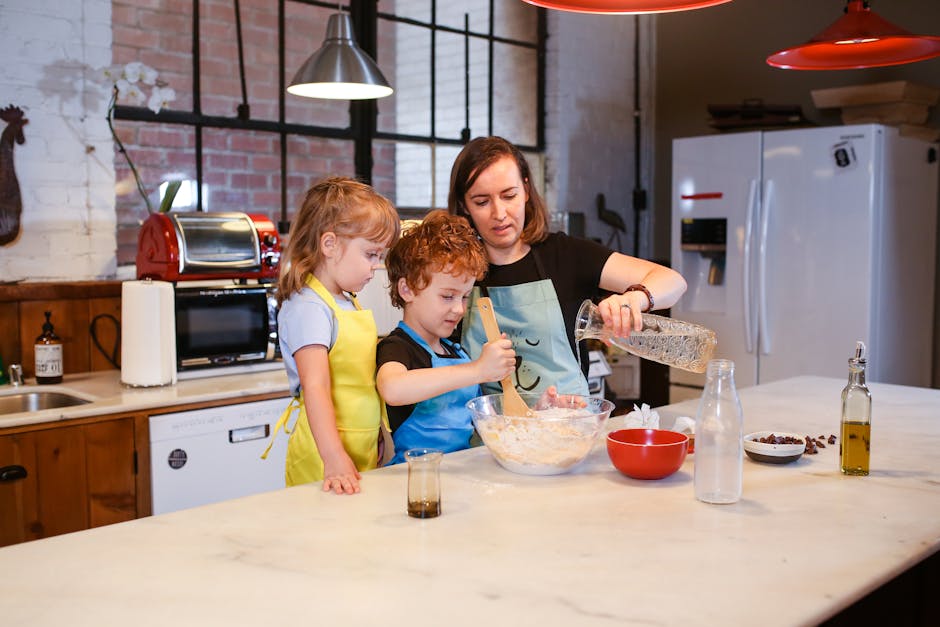
I started building plates.
Protein + produce + whole grain or starchy veg. That’s it. Not three separate courses.
One plate. Toddlers get a palm-sized protein (think Greek yogurt), a fist of spinach, and half a cupped hand of oats. Teens?
Double the protein. Triple the greens. Same formula.
Cottage cheese + berries + whole-grain toast. Canned salmon + avocado + spinach wrap. Peanut butter + banana + whole-wheat pita.
Hard-boiled eggs + cherry tomatoes + roasted sweet potato (frozen, microwaved). Black beans + salsa + corn tortillas.
All done in under five minutes. No stove required. (Yes, even the sweet potato.
Frozen works.)
The Hand Rule keeps portions sane: palm = protein, fist = veg, cupped hand = grain. Adjust up or down by age. No scales.
No apps.
Frozen broccoli costs $1.29 per serving. Fresh is $2.49. Canned black beans? $0.32.
Dried, soaked, cooked? $0.18. But who has time? Store-brand fortified cereal beats name-brand by 40% on cost and delivers the same iron and B12.
Here’s my real hack: freezer packs for smoothies. Spinach, banana slices, chia seeds (pre-portioned) in bags. Grab, blend, go.
This isn’t “meal prep.” It’s meal survival (done) right.
That’s why I keep the Nutrition Guide Fparentips printed and taped to my fridge.
Picky Eating, Allergies, and the Supplement Maze

I’ve watched three kids go through this. Not as a consultant. As a parent who once cried over a single pea on a plate.
The 3 Exposure Rule is non-negotiable. Offer a new food three times. No pressure.
No praise. Just serve it beside something they already love. I tried broccoli with hummus, then roasted, then raw sticks.
All within ten days. On day eleven? They dipped one piece.
That’s how it works.
Supplements? Most kids don’t need them. Vitamin D for exclusively breastfed infants?
Yes. Iron for preemies? Yes.
A multivitamin for your healthy 6-year-old who eats apples and scrambled eggs? No. Their liver isn’t broken.
I wrote more about this in Active Learning.
It’s doing fine.
Allergy vs. sensitivity vs. texture hate? Big difference. Hives, wheezing, vomiting after peanuts?
Pediatrician today. Stomach gurgles after dairy? Maybe lactose intolerance.
Refusing anything lumpy? That’s texture. Not allergy.
(And yes, I tested that theory with mashed banana versus whole banana.)
Try saying: “Your body loves carrots because they help your eyes see better at night.” Works better than “Just try it.”
Detox diets for kids? Don’t. Their livers and kidneys are still wiring themselves.
Juice cleanses spike sugar and crash focus. Ask any teacher. Sugar crashes hit hard in third period.
I used to stress over every bite. Then I found Active learning fparentips (not) flashcards or quizzes, but real ways to let kids explore food without performance pressure.
Nutrition Guide Fparentips helped me stop negotiating and start serving.
You’re not failing if they eat three foods. You’re winning if they’re calm at the table.
Start there.
Reading Labels Like a Pro (Skip,) Scan, Swap
I read labels like I’m checking for landmines. Because some are.
That “organic” granola bar? 14g of sugar. Hidden in barley grass juice powder. (Yes, that’s just sugar with a yoga mat.)
Sugar hides under 61+ names. Look past “cane syrup” and “evaporated cane juice.” Spot “maltodextrin,” “rice syrup,” “fruit concentrate.” If it ends in -ose, it’s sugar.
Yogurt A says “low-fat” and lists sugar second. Yogurt B says “plain” and lists milk first, then live cultures, then salt. Guess which one has 3g added sugar?
The First Three Ingredients Rule is real. They make up most of the product. “Whole grain” on the front? Check the ingredient list.
If it says “enriched wheat flour” first, it’s not whole grain.
Flavored oatmeal packets → plain oats + cinnamon + diced apple. Fruit snacks → dried mango + unsalted pistachios. Sports drinks → sparkling water + lemon + pinch of salt.
“Gluten-free” doesn’t mean nutritious. “Organic” doesn’t mean low-sugar. That’s the health halo trap.
I skip the front panel entirely. Always.
You do too, right?
For more real-world label decoding, check out the Playing lessons fparentips (it) walks through actual grocery hauls with kids in tow.
This is your Nutrition Guide Fparentips. Not theory. Just what works.
You’ve Got This. Right Now
I know you’re tired of second-guessing every bite.
You don’t need another perfect plan. You need something that works today, with the kids you have, the time you’ve got, and the energy you’re running on.
The Nutrition Guide Fparentips gives you two tools you can use tonight: the 3-part plate formula and the 3 Exposure Rule.
That’s it. No overhaul. No guilt.
Which one feels easiest to try first?
Pick just one. Run it for three days. Write down one win (even) if it’s “my kid touched the broccoli.”
You’ll see what sticks. You’ll feel less alone.
Most parents quit before day three. You won’t.
You’re not feeding a diet. You’re nurturing a lifetime of health, one thoughtful bite at a time.