Where Guilt Begins
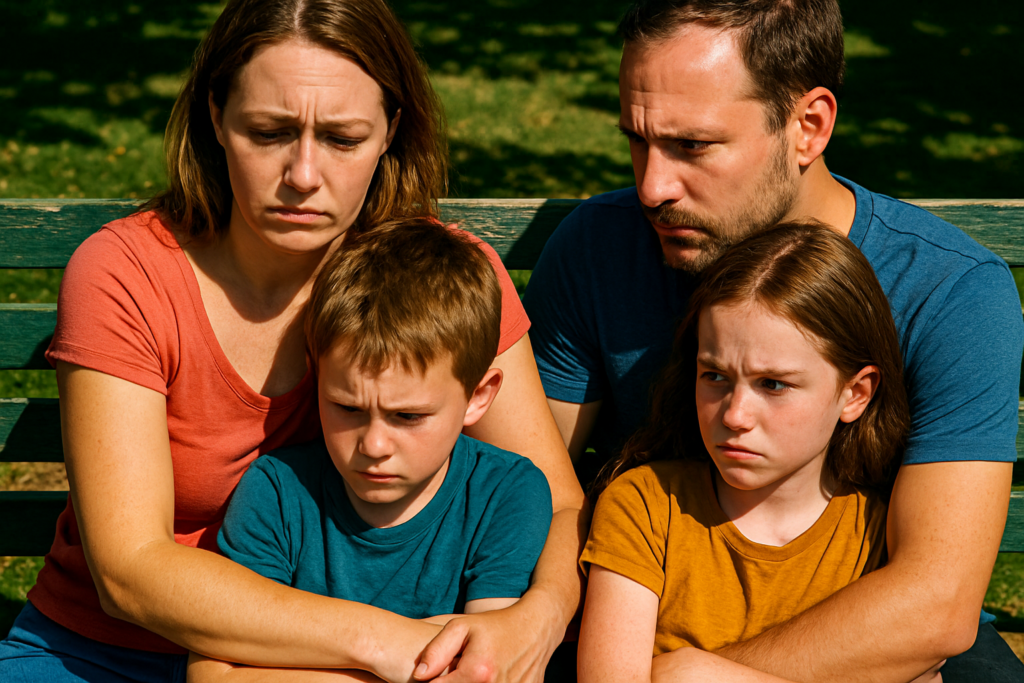
Guilt isn’t always loud. In blended families, it can show up quietly tight smiles, avoiding questions, or withdrawing after visits. It’s often triggered by loyalty conflicts. A child might feel like spending time with their stepparent means betraying their biological parent, or vice versa. Add in split attention from caregivers and shifting routines, and it’s easy for kids to feel emotionally tugged in multiple directions.
Children may also internalize the family upheaval. They start to believe they caused the tension or that keeping everyone happy is somehow their job. This internal script rarely gets spoken aloud, but it can stick for years if never addressed.
It’s also important to separate guilt from shame. Guilt says, “I did something bad.” Shame goes deeper it says, “I am bad.” Healthy parenting in blended families means helping kids name and own their feelings without letting those feelings morph into something heavier. Guilt can be a signal; shame tends to be a cage.
Signals Parents Shouldn’t Ignore
Kids don’t always say when something’s wrong but they tend to show you. Guilt in blended family dynamics can come out sideways: a child who suddenly clings to old routines or baby like habits (think bedwetting or tantrums), one who pulls back emotionally and spends more time alone, or one who’s constantly trying to make everyone happy, even at their own expense. These are signs they might be absorbing too much of the emotional weight in the household.
People pleasing and conflict avoidance can look oddly responsible, but when it’s driven by guilt, it’s less about kindness and more about fear fear of upsetting a parent, of being disloyal, or of choosing sides. The behavior becomes less about harmony and more about survival.
The key distinction here is this: adjusting to life in a blended family can be healthy. It involves learning, adapting, sometimes stretching. Internalizing isn’t. That’s when a child starts to carry silent blame for things they didn’t ask for and can’t control. Be alert to that shift. When their coping becomes self erasure, it’s time to step in.
Creating a Safe Emotional Space
Kids in blended families often carry emotional crosscurrents they can’t name. What helps most? Space to talk without any agenda attached. No lectures, no fixing, no pressure to choose sides. Just open dialogue where they can say things like “I miss Mom” or “I feel weird calling someone else Dad” and not have it turned into a problem to solve.
Let them be messy. Conflicting feelings are normal. They can love their stepmom and still miss their biological mom, or enjoy time with a new sibling while grieving the old version of their family. These aren’t signs of divided loyalty they’re signs of a kid adapting. When parents hear those feelings without making it about themselves, kids learn that emotions are safe to share.
At the same time, it’s okay to have boundaries. Something like, “It’s okay to be upset, but it’s not okay to yell at people,” keeps the emotional space open but grounded. Validation doesn’t mean letting everything slide. It means showing kids that their inner world matters, and that trust grows when adults stay steady, even when emotions run high.
Practical Steps for Support
Kids thrive in predictability, and this becomes twice as important in blended families. Start with consistency. If bedtime’s 8 p.m. at one house, aim for the same at the other. Same goes for rules around screens, chores, and morning routines. It doesn’t need to be identical, but it should be familiar.
Encouraging healthy bonds with all parental figures biological or step gives kids room to love without guilt. It’s not about replacing anyone. It’s about expanding their circle of support. When kids feel they don’t have to choose, the emotional load lightens.
Books and stories are underrated tools. Choose ones that talk about big feelings, conflict, and resolution in a way that fits your child’s age. Let the characters model tough choices and emotional growth without making it a lecture.
And maybe the hardest part: co parents need to communicate. Even small alignments like shared language around discipline or agreement on what counts as an after school treat can mean fewer mixed messages. Reducing friction between households gives children space to breathe, trust, and adapt without the guilt of navigating two opposing worlds.
When to Seek More Help
Sometimes, guilt becomes more than just a bump in the road. If a child consistently shows signs of deep withdrawal, self blame, sleeping issues, or avoids situations that used to bring joy, it might be time to bring in a professional. Therapy doesn’t mean something is broken it’s a tool that helps kids untangle complex feelings when talking to family isn’t enough. A trained therapist can give them a neutral space to process guilt, family changes, and emotional stress safely.
Don’t overlook the school system either. School counselors often spot shifts in a child’s mood or behavior early and can be strong allies. Group support programs at schools or community centers also give kids a chance to hear, “You’re not alone.” It goes a long way.
And here’s the thing: kids take emotional cues straight from their caregivers. Modeling emotional regulation as a parent or stepparent doesn’t mean pretending everything is perfect. It means showing them how you deal with stress, frustration, or guilt in grounded, healthy ways. When they see you naming your feelings, owning mistakes, and bouncing back they learn it’s normal, and they learn to do it too.
For parents facing the emotional thickets of blended family life, you’re not alone and there are tools to help. Our full guilt and shame guide takes a deeper look at where these feelings come from, how they show up in kids, and what you can do day to day to support healing and connection. It cuts through the noise with real signs to look for, simple language to open tough conversations, and solutions that actually work in real family chaos not just in theory. If you’re serious about showing up for your child and want practical steps to navigate this emotional terrain, this guide was built for you.